
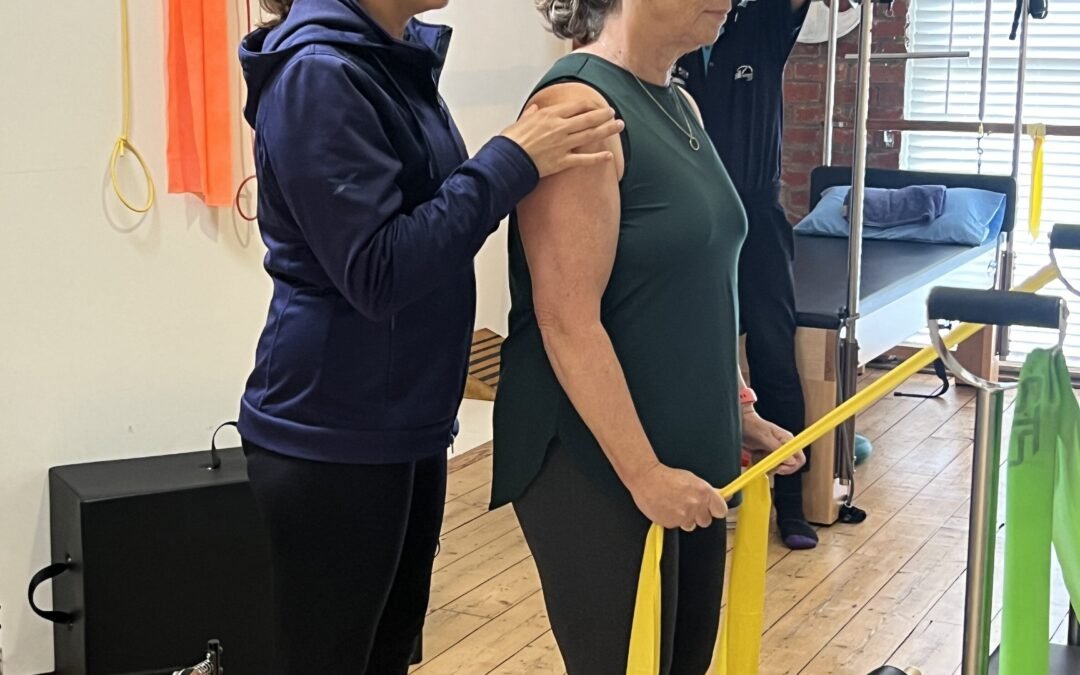
Shoulder pain is one of the most common reasons people seek physiotherapy. Whether you’ve been diagnosed with a rotator cuff injury, shoulder impingement, bursitis, labral injury, frozen shoulder, or you’re simply wondering “Why does my shoulder hurt?”, avoiding these common mistakes can make a significant difference to your recovery.
1. Treating the Symptoms Instead of the Cause
One of the biggest mistakes people make is focusing only on where the pain is.
Many people are given a sheet of exercises or find exercises online or through AI and assume that’s all they need. While general strengthening exercises can be helpful, shoulder pain is rarely caused by just one problem.
Successful shoulder rehabilitation requires a thorough assessment of posture, desk ergonomics, muscle tightness, thoracic mobility, shoulder blade control, neck function and everyday movement habits. If these contributing factors aren’t addressed, symptoms often return because the underlying cause hasn’t changed.
2. Ignoring Your Shoulder Blade, Neck and Posture
Your shoulder doesn’t work in isolation.
The position of your shoulder blade (scapula), upper back and neck has a major influence on how your shoulder moves and how much load is placed through the rotator cuff, labrum and surrounding tissues.
Poor posture, reduced thoracic mobility and weakness around the shoulder blade can overload the shoulder and contribute to ongoing pain. Understanding why your shoulder is overloaded is often the key to long-term recovery.
3. Reaching Too Far Away from Your Body
When your shoulder is inflamed or irritated, reaching away from your body dramatically increases the forces through the shoulder joint.
Whether you’re lifting groceries, carrying a child or reaching into the back seat of the car, keeping objects close to your body reduces unnecessary load and helps calm an irritated shoulder.
Small changes to your daily habits can significantly reduce pain while your shoulder heals.
4. Expecting a Quick Fix
The shoulder is one of the most mobile joints in the body, making it one of the most complex to rehabilitate.
Recovery takes patience, progressive loading and changing the movement patterns that contributed to the problem in the first place.
A physiotherapist can assess mobility restrictions, restore movement, improve shoulder blade control, retrain motor control and proprioception, and guide you through a graduated rehabilitation program that’s specific to your diagnosis and goals.
It’s also important to know when imaging—such as an ultrasound or MRI—is appropriate and when it isn’t. Likewise, cortisone injections shouldn’t automatically be the first option. Understanding the underlying pathology helps ensure treatment addresses the actual cause of your pain rather than simply masking the symptoms.
When Should You See a Physiotherapist for Shoulder Pain?
If your shoulder pain has lasted more than a few weeks, keeps returning, wakes you at night, limits your work or sport, or you’re unsure of your diagnosis, it’s worth having a comprehensive assessment.
Early assessment can often prevent a minor shoulder problem from becoming a long-term issue.
Book a Shoulder Assessment at K2 Health
If you’ve been living with chronic shoulder pain, your symptoms keep returning, or you’ve tried exercises without success, we’d love to help.
Book an appointment with Tracy, Sharon or Krystal at K2 Health for a comprehensive shoulder assessment. We’ll identify the underlying cause of your pain, explain your diagnosis, and develop an individualised treatment plan that addresses your mobility, strength, posture, movement patterns and long-term shoulder health.
Our goal isn’t just to reduce your pain—it’s to help you understand your shoulder, restore confidence in movement and get you back to doing what you love.
